
Transcript
Announcer:
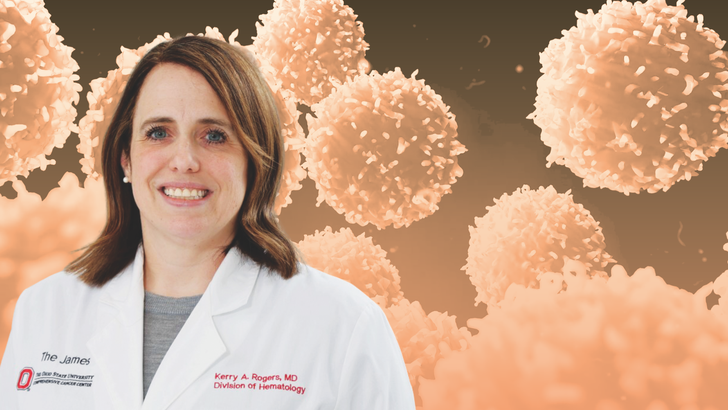
You’re listening to Project Oncology on ReachMD. On this episode, we’ll hear from Dr. Kerry Rogers, who’s an Associate Professor in the College of Medicine at the Ohio State University. She’ll be discussing supportive care for patients with chronic lymphocytic leukemia, or CLL for short, during and after therapy, which she spoke about at the 2026 Society of Hematologic Oncology Annual Meeting. Here’s Dr. Rogers now.
Dr. Rogers:
Once patients are on treatment and doing well on it, supportive care on an ongoing basis can be a really important way to make sure patients stay on their treatment and continue to benefit. I've found that an open discussion of side effects and strategies to mitigate any side effects patients are experiencing, such as diarrhea with venetoclax where sometimes antidiarrheals can be really helpful, can help people live better while on treatment.
Something else that's really important in the supportive care realm is discussing some of the psychosocial aspects of being on treatment and how patients might feel about that. I know I've had a lot of patients who have chosen fixed-duration treatments, and it's much easier to support them through side effects when they know it's of a limited duration compared to BTK inhibitors where side effects are cumulative and the treatment doesn't really have an endpoint. In those cases, sometimes discussing and making sure that patients understand that there's an ongoing benefit to staying on treatment is a good approach there.
It's important to know that supportive care doesn't end when treatment does. Patients still have a really high risk of infections—it’s higher than the average for the population and age-matched controls—and a high risk of second cancers. So we think of Richter syndrome, skin cancer, breast cancer, prostate cancer, colon cancer—those kinds of things. And I think it's really important to always discuss with the patients even when they're not on treatment whether or not they're staying up to date on their vaccines and cancer screenings and how that might affect their ability to get a response from a vaccine.
We know that treatment with an anti-CD20 monoclonal antibody makes it nearly impossible to get an antibody response to a vaccine for 6 to 12 months after that treatment's completed. So sometimes at the end of treatment's a nice time to sit down with the patient and talk about what vaccines they're due for, where we are in terms of seasonal flu vaccines, and make sure that they know that this is a good opportunity to get up to date on some of those vaccines that they might have deferred until the end of a fixed-duration treatment and to make sure they get their cancer screenings. So things like skin checks should occur even on treatment, and there should be a discussion all the time with the patients. But sometimes, especially for fixed-duration treatments, patients will be due for a screening colonoscopy and want to wait until their treatment's done so they don't have to worry about their treatment and their screening colonoscopy.
So I think it's a nice opportunity when treatment ends to do that and also to look at prophylactic anti-infectives and see if they can be discontinued. So if you had given something like venetoclax and obinutuzumab to a patient and they were taking valacyclovir due to increased risk of viral reactivation, you can discuss with them whether or not it makes sense to continue that if they have a history of shingles or prior VZV or HSV reactivation or if it's far enough after treatment that they can stop this and reduce their pill burden. So I think finishing your treatment's a nice time to make those reassessments for people.
Announcer:
That was Dr. Kerry Rogers talking about supportive care for patients with CLL throughout their treatment journey. To access this and other episodes in our series, visit Project Oncology on ReachMD.com, where you can Be Part of the Knowledge. Thanks for listening!

